

AMRT - Applied Microbial Technician I, (Mold Remediation)
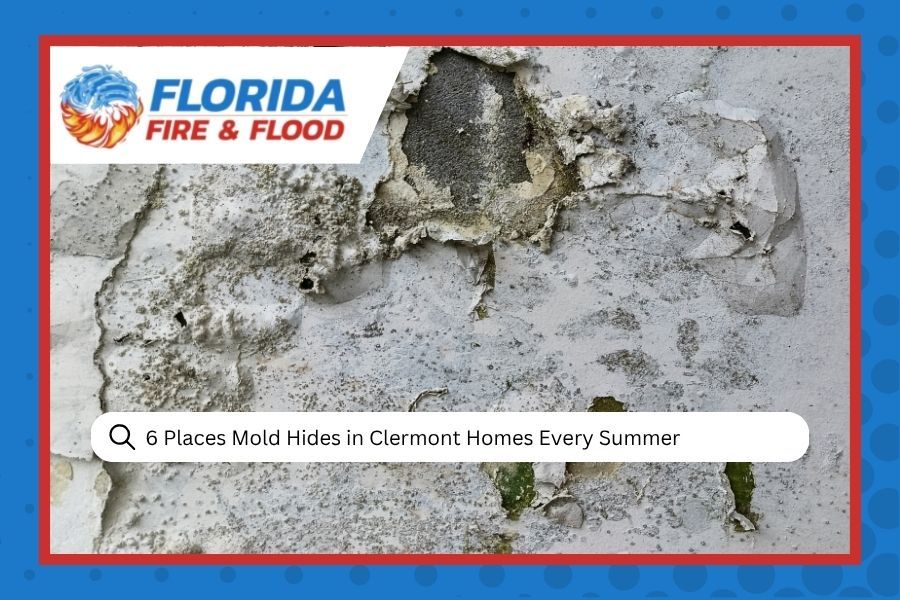
6 Places Mold Hides in Clermont Homes Every Summer
June 18, 2026
Randy Lazarus
Jump To:
That faint musty smell you can't quite place? It usually traces back to a spot you've never thought to check. Hidden mold in Clermont homes loves quiet corners, dark closets, and the back sides of things you rarely pull away from the wall. Summer turns those small hiding spots into bigger problems, and our IICRC-certified team at Florida Fire & Flood has handled enough professional mold remediation jobs across Central Florida to know the same six places come up over and over.
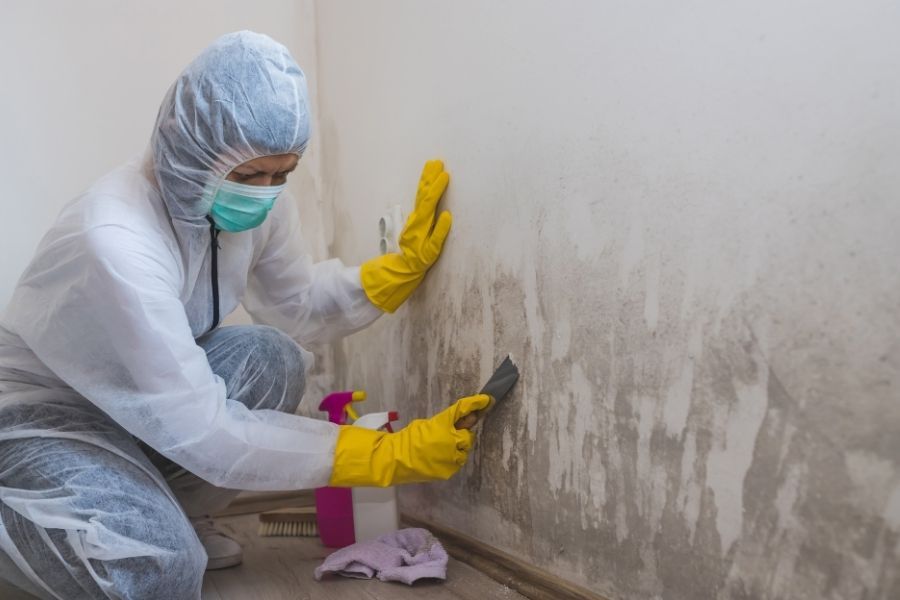
Finding mold in one of these spots is only step one, since cleanup takes proper PPE and tools the average homeowner doesn't have.
Why Summer Humidity Increases Mold Risk in Clermont Homes
Clermont's warm, lake-adjacent air pushes indoor humidity well past what most homes are built to handle. Once humidity climbs above 60%, mold spores already floating in the air find moisture-rich surfaces and start colonizing within 24 to 48 hours. Add daily thunderstorms and an AC working overtime, and you have ideal conditions for growth.
The lakes around Clermont and Central Florida add another layer, since lake-adjacent air carries more moisture year-round. The CDC notes mold can trigger respiratory irritation and allergies, which is why catching it early matters.
1. AC Closet Walls
Your AC closet is one of the most common starting points for hidden mold growth. Condensation drips, clogged drain lines, and air handler leaks can soak the surrounding drywall for weeks. The closet stays dim and closed off, so small problems grow quietly.
Look for staining on the lower walls, soft drywall near the unit, peeling paint, and a musty smell when the door first opens. A flashlight along the floor seams usually tells the story.
2. Under Kitchen Sinks Behind Cleaning Supplies
Cleaning bottles and grocery bags are remarkably good at hiding slow leaks. A weeping P-trap, loose supply line, or dripping shutoff valve can warp the cabinet floor for months before anyone clears the clutter and sees it. The damage usually runs deeper than the surface stain.
Pull everything out once a month during summer. Check for warping, dark spots, swollen wood, and damp odors. Run your hand along the pipes where they meet the wall. Moisture on your fingers means trouble is already underway.
Spotted Staining or a Musty Smell You Can't Track Down?
Our team can assess the visible damage and explain your next steps before mold spreads further.
Schedule a Free Consultation3. Bathroom Baseboards Behind Toilets
The wall and trim behind your toilet sees more moisture than most homeowners realize. Slow drips from supply lines, condensation on the cold tank in humid air, and worn floor seals all feed moisture into the baseboards. Tight spaces don't dry well, which is exactly what mold needs.
Crouch down and compare the baseboard color against the rest of the wall. Look for bubbling paint, soft trim, gaps where the baseboard pulls away, or a musty odor that lingers after cleaning. Our guide to preventing mold in Florida homes covers humidity tips that help here.
4. Laundry Room Drywall Behind Machines
Washers and dryers push a surprising amount of moisture into a small room. Hose connections weep, dryer vents can leak humid air into the wall cavity, and lint buildup traps heat against drywall. Most homeowners never pull the machines out, so problems quietly compound.
Once during summer, slide the machines forward. Check for staining, dampness, lint buildup, and signs of hose wear or rust. Hot, humid air plus hidden moisture is behind many water damage restoration calls we get from moisture-prone areas the EPA flags as common problem zones.
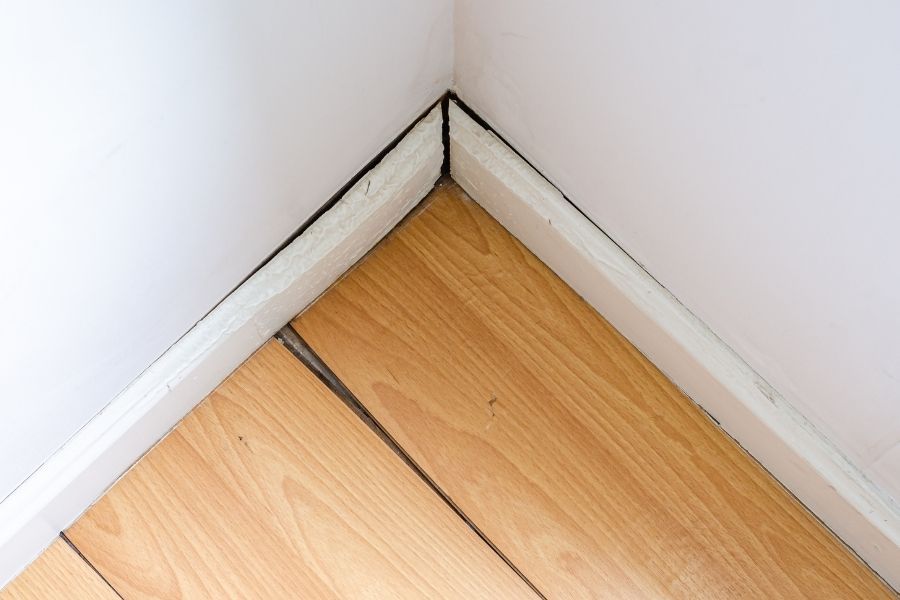
Baseboards lift just enough during humid Clermont summers to let moist air get behind the drywall.
5. Window Sill Tracks
Window tracks collect rainwater, condensation, and outdoor debris all summer long. That dark buildup in the track isn't always just dirt. When moisture sits long enough, the wood underneath softens, and what looks like grime can hide active mold spotting along the edges.
Run a paper towel along the track. If it comes back damp, green-tinged, or black, you have more than dust to deal with. Recurring condensation on the glass is another flag.
6. Garage Drywall Near Water Heaters
Florida garages run hot and humid, which makes them rough on water heaters and the walls around them. Small tank leaks, pressure relief valve discharge, and condensation against drywall all add up over a summer. Poor garage ventilation means moisture has nowhere to escape.
Walk around the tank with a flashlight. Look for rust streaks, water marks, soft spots, bubbling paint, or staining at the base of the wall. Our post on early signs of black mold covers what discoloration patterns can tell you.
Your Monthly Summer Inspection Checklist
- Open the AC closet, sniff for musty odors, scan for staining
- Empty under-sink cabinets, check for warping and dark spots
- Crouch behind the toilet, inspect baseboards and trim
- Pull laundry machines out, check the drywall behind
- Wipe window tracks for discoloration
- Walk around the water heater with a flashlight
When to Call a Mold Remediation Professional
Small spotting in a window track is a different problem than mold spreading behind drywall. If the affected area is larger than 10 square feet, the musty smell has no visible source, or growth keeps returning after cleaning, it's time to bring in help. Surface cleaning rarely solves the moisture problem underneath.
Per Florida regulations, formal mold testing must be performed by a licensed hygienist, so we coordinate with one when sampling is needed. Our role is identifying visible concerns, controlling the moisture source, and handling remediation safely. Our overview of common mold causes is a useful starting point.
Need Help With Hidden Mold in Your Clermont Home?
If you've spotted visible mold, moisture damage, or a musty smell you can't track down, we can help. Our team has handled homes and businesses across Lake County and Central Florida for years, and we know where summer humidity does its quietest damage.
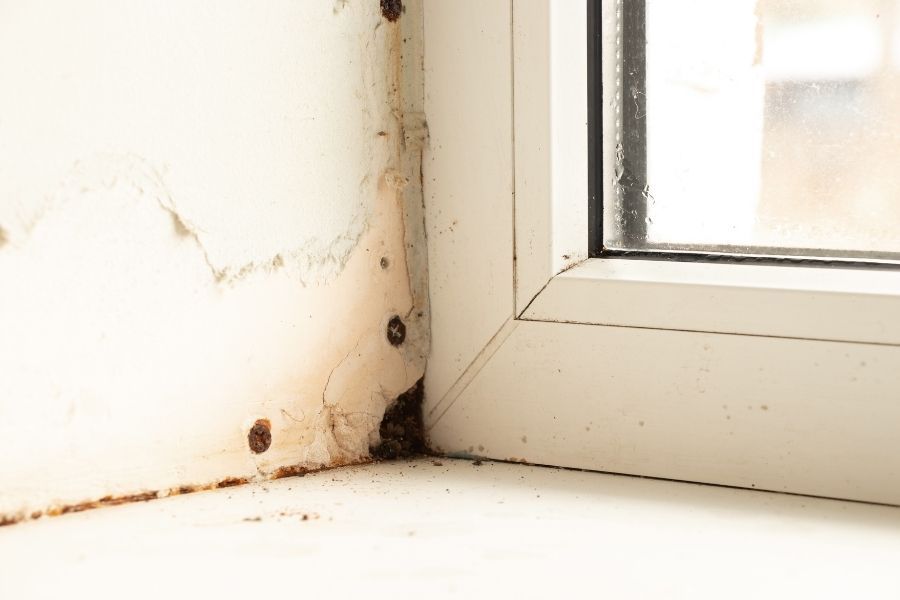
Condensation on aluminum window tracks gives mold a place to land every single morning during humid months.
Frequently Asked Questions
How quickly can hidden mold spread in a Clermont home during summer?
Mold can begin colonizing a moist surface within 24 to 48 hours. In Clermont's summer humidity, hidden spots like AC closets can develop visible growth in under a week if a leak goes unnoticed.
Can I clean small hidden mold spots myself?
Small surface spots under 10 square feet can sometimes be wiped down with a mild cleaner, but if the moisture source isn't fixed, mold returns. Anything larger, recurring, or hidden behind drywall should be handled by a pro.
Does Florida Fire & Flood perform mold testing in Clermont?
Florida law requires mold testing be performed by a licensed hygienist, so we don't handle formal testing in-house. We coordinate with a licensed partner when sampling is needed and focus on remediation.
What humidity level should I keep my Clermont home at during summer?
Indoor humidity between 30% and 50% is generally safe. In Clermont's climate, that often means running your AC consistently and using a dehumidifier in moisture-prone rooms.

Randy Lazarus
About The Author:
Randy Lazarus is the owner of Florida Fire & Flood, a locally owned and family-operated restoration company serving Central Florida communities since 2021. Leading a team of IICRC-certified technicians, Randy has built a reputation for providing 24/7 emergency response and compassionate service to homeowners and businesses facing water damage, fire damage, and mold emergencies. As a member of the Central Florida community, Randy understands the unique challenges property owners face in the region and is dedicated to helping his neighbors restore their properties and get back to normal life.
Read More:

Firefighting water soaks floors, walls, and ceilings far past the burn zone. Learn why extraction and drying must run alongside fire and smoke cleanup.
Foundation water intrusion in Ocala starts with clay soil. Learn the warning signs, how it differs from a plumbing leak, and when it is time to call us.

An attic fire took out the top floor of this Orlando home. See how our team rebuilt it, from the first tarp on the roof to finished kitchen and baths.

Soot damage cleanup after a house fire: learn what our IICRC certified team can save and what to replace, from textiles to electronics. Free consultation.

Hiring a water damage restoration company? Ask these 5 smart questions about certification, insurance, response time, gear, and repairs before you sign.

High water pressure damages pipes in Eustis homes. Learn the safe PSI range, regulator warning signs, and how to catch hidden leaks before they spread.