

AMRT - Applied Microbial Technician I, (Mold Remediation)
Drain Backup Prevention During Heavy Rain: Protecting Your Florida Home
July 2, 2026
Randy Lazarus
Jump To
Florida's rain season hits hard. One afternoon storm can drop several inches in under an hour, and if your drains aren't ready, that water ends up inside your home. Smart drain backup prevention heavy rain planning starts before the storm rolls in. Our team at Florida Fire & Flood has responded to backup calls across Lake County, Tavares, Ocala, Lady Lake, and The Villages, and the pattern is almost always the same: a homeowner had no idea anything was wrong until water was bubbling up through the floor drain.
Most of this is preventable. If you do need water damage restoration services, we're here, but we'd much rather you never need us for that. Here's what to know before storm season peaks.
When prevention isn't enough, the Florida Fire & Flood team responds within an hour, 24/7 across Central Florida.
Why Florida Homes Are More Vulnerable Than Most
Florida's flat terrain means rainwater has nowhere to go naturally. In hillier states, gravity pulls runoff away from structures. Here, it sits. The water table climbs during wet season too, so the soil can't absorb much. According to the U.S. Environmental Protection Agency, heavy rainfall is a leading cause of sewer overflows nationwide, and flat, low-lying areas bear the brunt. When storm drains and sewer lines hit capacity, water backs up through the nearest low-pressure point in your home.
Already seeing signs of a backup? Our team at Florida Fire & Flood responds within an hour, 24/7.
Get a Free ConsultationWarning Signs a Backup Is Developing
A full-blown drain backup during storm season rarely comes without warning. Your plumbing sends signals, and most homeowners miss them because they seem minor.
Pay Attention to These Early Warnings
- Gurgling drains after flushing or running water. Air trapped in the line usually means a partial blockage downstream.
- Slow drains throughout the house, not just one fixture. Multiple sluggish drains point to the main sewer line, not a single clog.
- Toilets that bubble when you run the washing machine or kitchen sink. A major red flag for a main line issue.
- Persistent sewage smell from floor drains. A dry trap is sometimes the cause, but a recurring smell can signal something bigger.
- Water pooling near your cleanout access cap in the yard. The problem may already be underway.
If you notice two or more of these signs, especially with storms in the forecast, call a plumber before it rains. A camera inspection of the main line costs a fraction of what backup restoration runs.
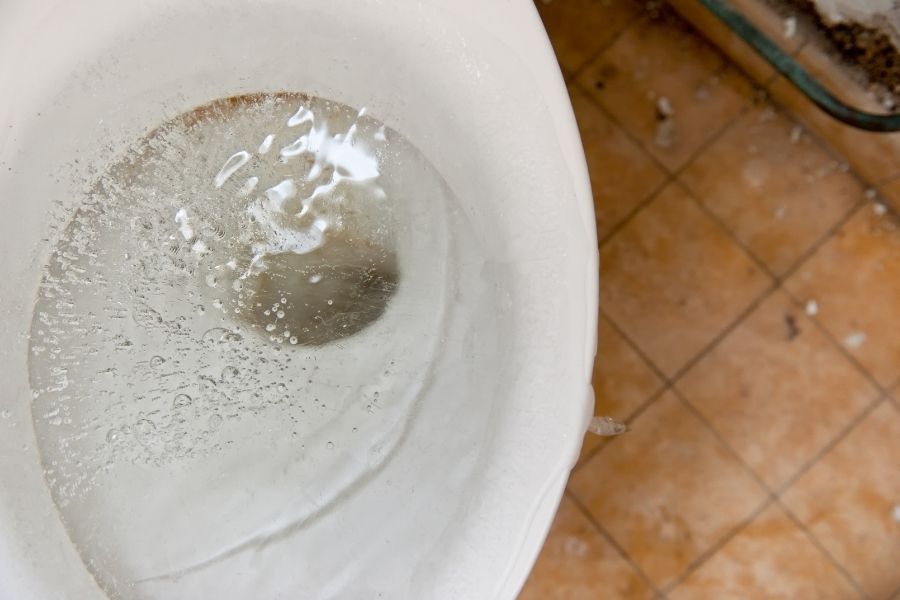
Bubbling toilets and gurgling floor drains are early signs your main sewer line is under pressure. Don't wait for a storm to find out.
Prevention Steps to Take Before the Next Storm
Good drain backup prevention heavy rain planning comes down to a few habits and one-time upgrades. The five steps below cover what every Central Florida homeowner should do before the season starts.
Clear Exterior Drains and Gutters First
Clogged gutters funnel water straight down your foundation wall instead of away from it. Yard drains packed with sediment back up the moment heavy rain starts. Walk the property before storm season and clear any drain grate that's covered or full of debris.
Extend Downspouts at Least 6 Feet From the Foundation
Short downspouts deposit water right next to the slab. Extenders are inexpensive and available at any hardware store. Direct the flow toward the street or a swale.
Get a Main Sewer Line Camera Inspection
If your home is 15 or more years old and you've never had the main line scoped, it's worth doing before storm season. Oak and cypress roots are aggressive in Central Florida and love cracked older pipes. A plumber can show you exactly what's in there. If water does get in, our post on what happens during professional water extraction walks through the restoration timeline.
Keep Grease Out of Kitchen Drains
Grease buildup narrows drain lines over time. Under normal conditions, a partial blockage may go unnoticed. When sewer pressure spikes during a storm, it becomes a full backup fast. Let grease cool in a container and throw it in the trash.
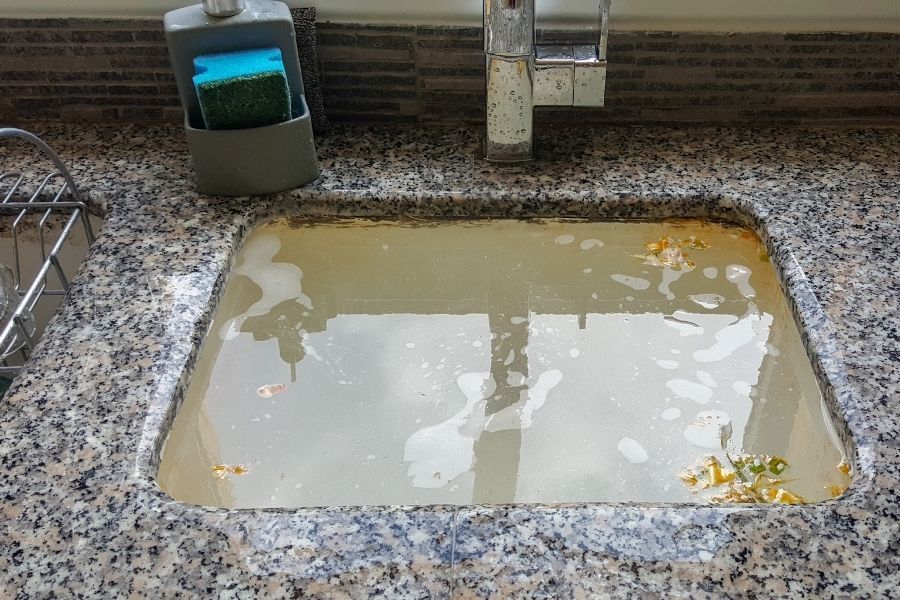
A clogged kitchen sink is one of the earliest signs of a developing drain backup. Grease buildup is a leading culprit in Central Florida homes.
Backwater Valves: The Best Way to Prevent Sewer Backup in Florida
The most effective single step to prevent sewer backup Florida homeowners face every rainy season is a backwater valve. This one-way gate installs in your main sewer line. Water flows out normally, but if municipal sewer pressure reverses, the valve closes and nothing comes back in. Installation is a job for a licensed plumber. Some Florida counties offer rebate programs, so check with your municipality first. Plan for annual testing and cleaning after installation.
If a Backup Happens Anyway, Move Quickly
Even well-prepared homes can get overwhelmed. If water is backing up during a storm, act fast.
- Stop using all water fixtures immediately. Every gallon you add makes it worse.
- Cut power to affected areas at the breaker if water is near any outlets or appliances.
- Don't attempt to clean up sewage yourself. The contamination risk is serious.
- Document everything with photos before cleanup starts, for your insurance claim.
- Call a certified restoration company right away.
Sewage backups are Category 3 water damage, the most hazardous classification. Bacteria and pathogens require proper protective equipment and disposal. Our team at Florida Fire & Flood handles storm and sewage damage restoration including sewage incidents, and we're IICRC certified. We serve Tavares, Lady Lake, Ocala, Leesburg, Mount Dora, The Villages, and all of Lake County. If you're in the middle of it right now, contact our team. And for related seasonal risks, our guide on crawl space moisture control before summer is worth a read.
Prevention is smart. But when it's not enough, Florida Fire & Flood is your 24/7 backup plan.
Contact Our Team NowFrequently Asked Questions
Why do drain backups happen more during heavy rain in Florida?
Florida's flat terrain means water can't drain downhill naturally. When the water table rises during wet season and soil saturates, storm drains and sewer lines hit capacity fast. Pressure reverses and water backs up through the lowest point in your home.
What's the difference between a storm drain backup and a sewer backup?
A storm drain backup involves excess rainwater overwhelming exterior drainage. A sewer backup involves wastewater reversing from the municipal line into your home. Sewer backups are far more hazardous due to biological contamination and always require professional cleanup.
Does homeowner's insurance cover drain backup damage?
Standard policies typically don't cover sewer or drain backups without a specific endorsement. Review your policy before storm season and ask your agent about adding a sewage backup rider.
How quickly does mold develop after a drain backup in Florida?
Mold can begin growing within 24 to 48 hours in Florida's humidity. After a sewage backup, organic material accelerates growth even faster. Our mold remediation team can assess and address any growth that's already started.

Randy Lazarus
About The Author:
Randy Lazarus is the owner of Florida Fire & Flood, a locally owned and family-operated restoration company serving Central Florida communities since 2021. Leading a team of IICRC-certified technicians, Randy has built a reputation for providing 24/7 emergency response and compassionate service to homeowners and businesses facing water damage, fire damage, and mold emergencies. As a member of the Central Florida community, Randy understands the unique challenges property owners face in the region and is dedicated to helping his neighbors restore their properties and get back to normal life.
Read More:

Firefighting water soaks floors, walls, and ceilings far past the burn zone. Learn why extraction and drying must run alongside fire and smoke cleanup.
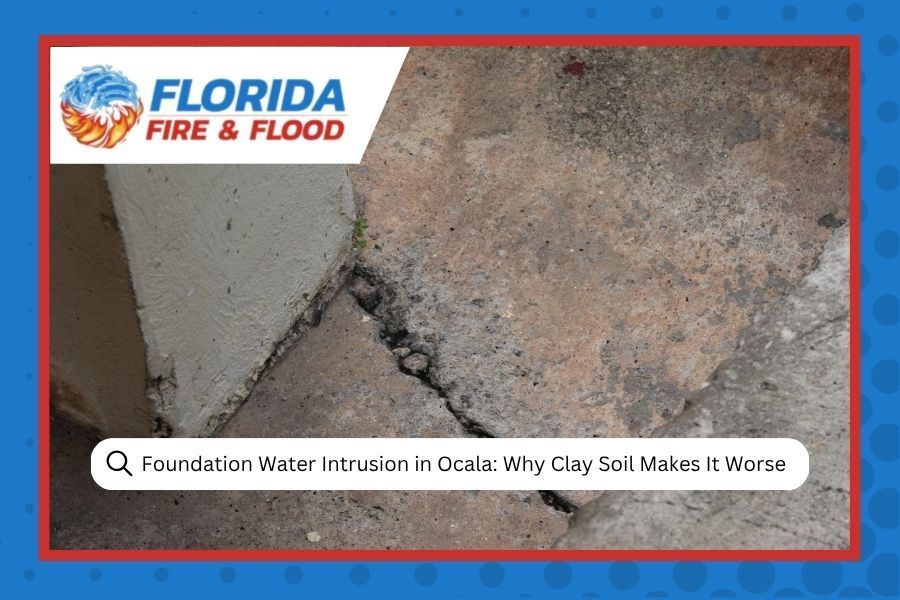
Foundation water intrusion in Ocala starts with clay soil. Learn the warning signs, how it differs from a plumbing leak, and when it is time to call us.
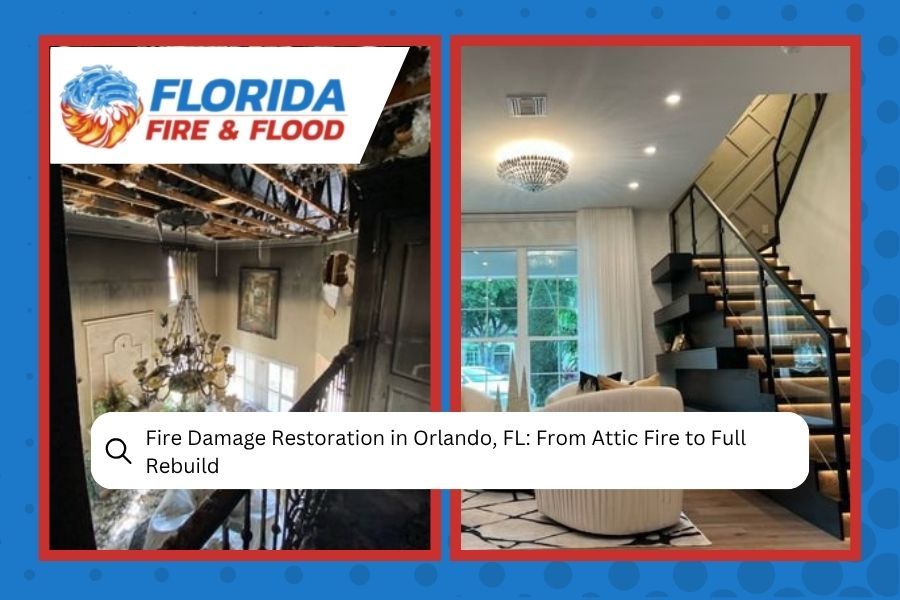
An attic fire took out the top floor of this Orlando home. See how our team rebuilt it, from the first tarp on the roof to finished kitchen and baths.
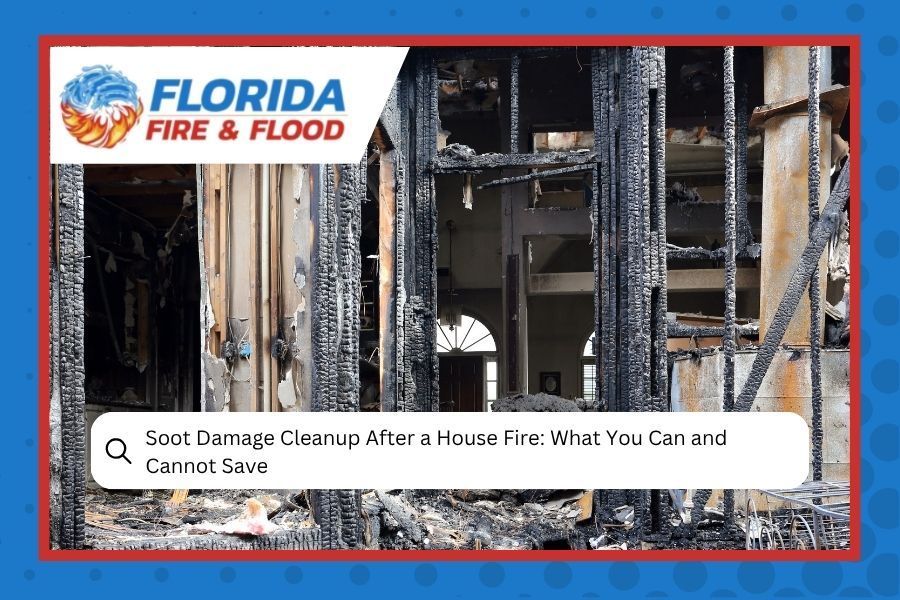
Soot damage cleanup after a house fire: learn what our IICRC certified team can save and what to replace, from textiles to electronics. Free consultation.
Hiring a water damage restoration company? Ask these 5 smart questions about certification, insurance, response time, gear, and repairs before you sign.
High water pressure damages pipes in Eustis homes. Learn the safe PSI range, regulator warning signs, and how to catch hidden leaks before they spread.