

AMRT - Applied Microbial Technician I, (Mold Remediation)
Water Pressure Problems in Eustis: How Excess Pressure Destroys Pipes
July 23, 2026
Randy Lazarus
Most homeowners never think about water pressure damage in Eustis until a pipe joint lets go behind a wall. Here's the short version: water pressure above 60 PSI slowly stresses your pipes, fittings, and appliance hoses until something fails. Our team at Florida Fire & Flood handles the aftermath through water damage restoration, and we'd rather help you avoid the call entirely.
Think of your plumbing like the tires on your car. A little extra pressure feels fine, but push it too far for too long and you get a blowout at the worst possible moment.
What Counts as Normal Water Pressure?
Normal household water pressure sits between 40 and 60 PSI. That range gives you a strong shower and quick-filling sinks without straining your plumbing. Once pressure climbs past 60 PSI, the risk to pipes and fittings starts rising fast.
| Pressure (PSI) | What It Means |
|---|---|
| Under 40 | Too low. Weak showers and slow fixtures. |
| 40 to 60 | The sweet spot. Safe and comfortable. |
| 60 to 80 | Caution zone. Wear adds up over time. |
| Over 80 | Danger. Codes require a regulator. |
According to the EPA's WaterSense guidance, most plumbing codes require a pressure-regulating valve once supply pressure tops 80 PSI. That rule exists for a reason.
Why Eustis Water Pressure Often Runs High
Municipal systems are built to push water uphill and keep fire hydrants ready. To do that reliably, utilities often set street pressure higher than any single home needs. By the time that water reaches your meter in Eustis, it can easily sit above the safe 60 PSI line.
Elevation plays a role too. Homes lower than the local water tower feel extra pressure, the same way the bottom of a pool feels heavier on your ears. Add Florida's flat terrain and long supply runs, and pressure can swing between neighborhoods in Eustis, Mount Dora, and nearby Tavares.
Already Spotted a Leak or Water Stain?
Pressure damage rarely waits for a convenient time. If water is showing up where it shouldn't, our IICRC certified team is available 24/7 across Central Florida.
Get a Free ConsultationHow High Water Pressure Pipe Damage Happens
High water pressure pipe damage is a wear problem, not a single dramatic event. Every faucet you shut off sends a small shock wave back through the lines. At safe pressure, your system shrugs it off. At high pressure, that constant pounding loosens joints until they crack.
The weakest links usually go first:
- Pipe joints and solder seams work loose under repeated stress.
- Appliance connections on dishwashers, washing machines, and ice makers split at the hose.
- Fixture valves and toilet fill valves wear out years ahead of schedule.
- Water heaters strain at the relief valve and tank seams.
Appliance hoses are the usual culprits. We see it in dishwasher leaks across Eustis properties and in appliance water line failures in Clermont homes. The hose rarely costs much. The flooded cabinet and subfloor underneath it are another story.
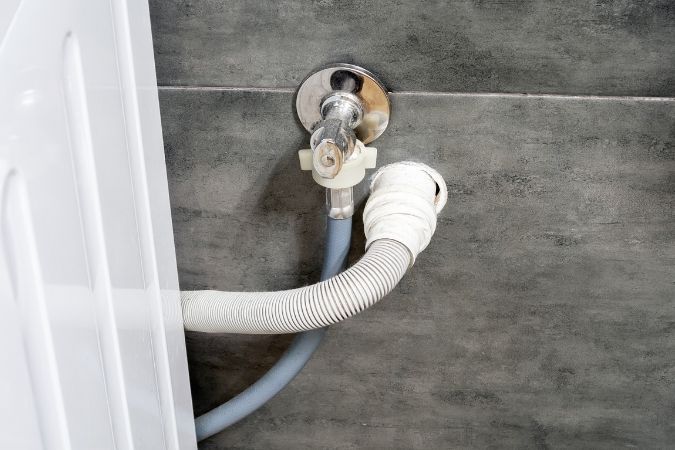
Appliance hoses like this washing machine line are often the first to fail under high pressure, splitting at the connection and flooding the space behind the unit.
Quick Math: Why 80 PSI Hurts
Going from 50 PSI to 80 PSI is a 60 percent jump in force. Your pipes don't get 60 percent stronger to match. That gap is where slow leaks and sudden bursts begin, often hidden inside walls.
The "Mystery Leak" Connection
High pressure is behind many of those "where is this water coming from?" leaks. A joint stressed by excess pressure may weep a few drops at a time instead of bursting. That slow drip hides inside a wall for weeks, quietly soaking framing and drywall.
By the time you notice a stain, a musty smell, or a jump in your water bill, the damage is spreading. In our Florida humidity, hidden moisture invites mold within a day or two, which is why our mold remediation services so often start with a leak nobody saw. Slow toilet supply line failures, like the ones we cover in this Mount Dora guide, follow the same quiet pattern.
How a Water Pressure Regulator Protects Your Home
A water pressure regulator in Florida homes is a bell-shaped valve installed where the main line enters your house. It takes whatever the city sends and steps it down to a safe, steady level. In other words, it's a buffer between the street and your pipes.
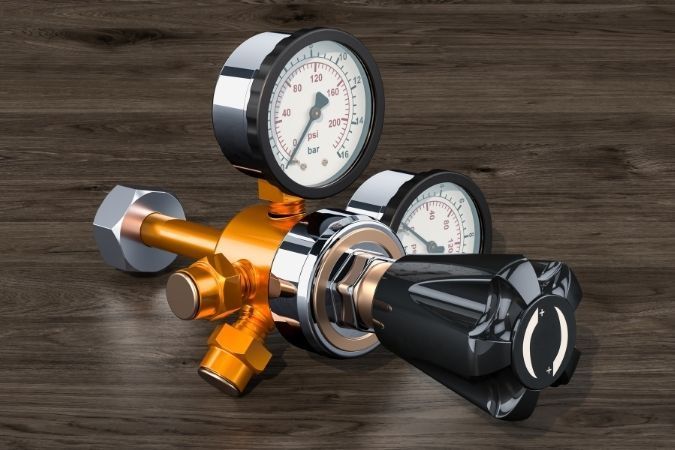
A water pressure regulator sits where the main line enters your home, holding city pressure to a safe, steady level for your indoor plumbing.
As the U.S. Department of Energy's Building America program explains, a regulator uses a spring-loaded diaphragm to hold output pressure steady even as supply pressure swings. Most last 10 to 15 years. When one fails, pressure can spike without warning.
Signs your regulator may need replacing:
- Pressure that's suddenly too strong or too weak at the tap.
- Banging or hammering sounds when you shut off water.
- Fixtures and toilet valves that keep wearing out early.
- A gauge reading that climbs above 80 PSI.
How to Test Your Water Pressure
Testing your water pressure takes about five minutes and an inexpensive gauge. Here's the simple version, no plumbing license required:
- Buy a screw-on water pressure gauge from any hardware store.
- Pick an outdoor spigot closest to your main line.
- Turn off faucets and water-using appliances inside.
- Thread the gauge onto the spigot and open it fully.
- Read the number. Anything over 60 PSI deserves attention. Over 80 PSI needs action.
If your reading is high, a licensed plumber can install or adjust a regulator. If you've already found water damage from a hidden leak, that's where our crew comes in, including full structural reconstruction when the damage runs deep.
When Pressure Damage Goes Undetected
High pressure often does its damage long before anyone notices. When a slow leak finally shows itself, our family-owned team at Florida Fire & Flood is ready around the clock, and we work directly with most insurance companies so you don't have to play middleman. We serve Eustis and the surrounding Lake, Orange, and Marion Counties.
Get Eustis Water Damage HelpFrequently Asked Questions
Can high water pressure really cause hidden water damage in my Eustis home?
Yes. Excess pressure stresses joints and hoses until they weep small amounts of water behind walls or under floors. These slow leaks often go unnoticed for weeks, soaking framing and feeding mold before any visible sign appears.
What PSI is too high for a Florida home?
Aim for 40 to 60 PSI. Pressure between 60 and 80 PSI speeds up wear, and anything above 80 PSI is high enough that plumbing codes require a pressure regulator to protect your system.
How long does a water pressure regulator last?
Most regulators last 10 to 15 years. Watch for hammering noises, fixtures wearing out early, or pressure that suddenly feels off. A quick gauge test will confirm whether yours is still doing its job.
Does homeowners insurance cover pressure-related pipe damage?
Sudden, accidental damage is often covered, while slow leaks from long-term wear may not be. Documentation matters, and our team has years of experience working directly with insurers to help Central Florida families through the claim.

Randy Lazarus
About The Author:
Randy Lazarus is the owner of Florida Fire & Flood, a locally owned and family-operated restoration company serving Central Florida communities since 2021. Leading a team of IICRC-certified technicians, Randy has built a reputation for providing 24/7 emergency response and compassionate service to homeowners and businesses facing water damage, fire damage, and mold emergencies. As a member of the Central Florida community, Randy understands the unique challenges property owners face in the region and is dedicated to helping his neighbors restore their properties and get back to normal life.
Read More:
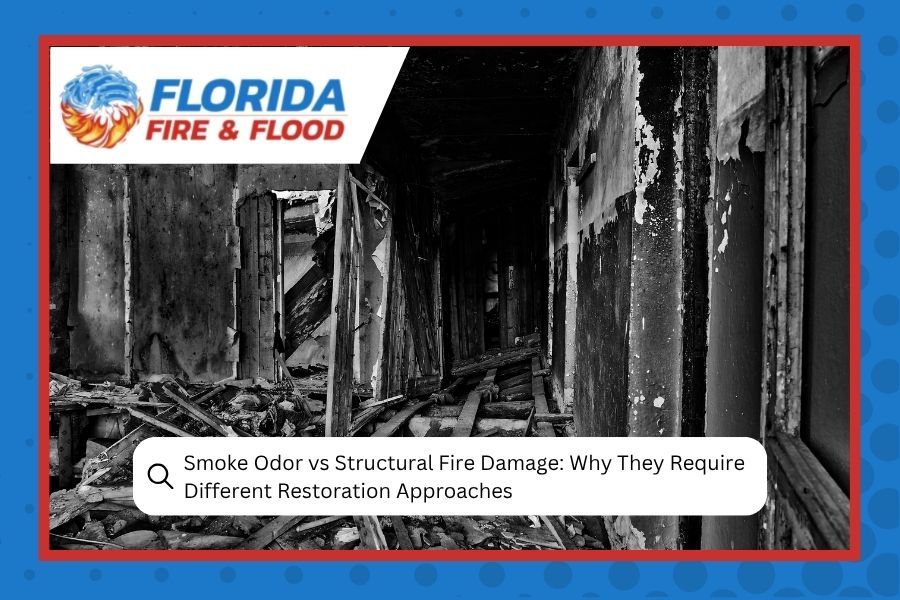
Smoke odor removal vs fire damage restoration explained: why odor and structural damage need different methods, timelines, and claims in Central Florida.
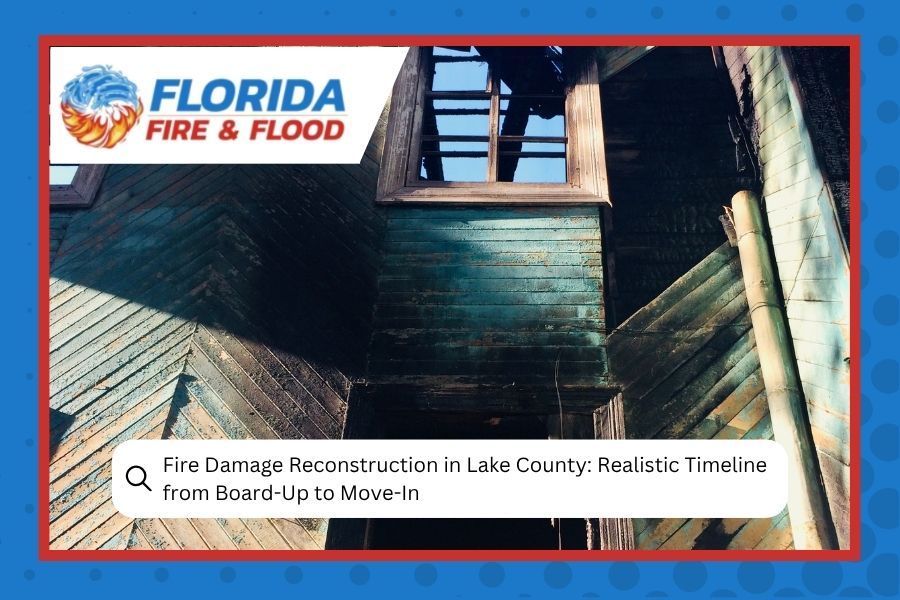
See the fire damage reconstruction timeline Lake County homeowners can expect, from board-up to move-in, plus the permit and insurance delays to plan for.

Firefighting water soaks floors, walls, and ceilings far past the burn zone. Learn why extraction and drying must run alongside fire and smoke cleanup.
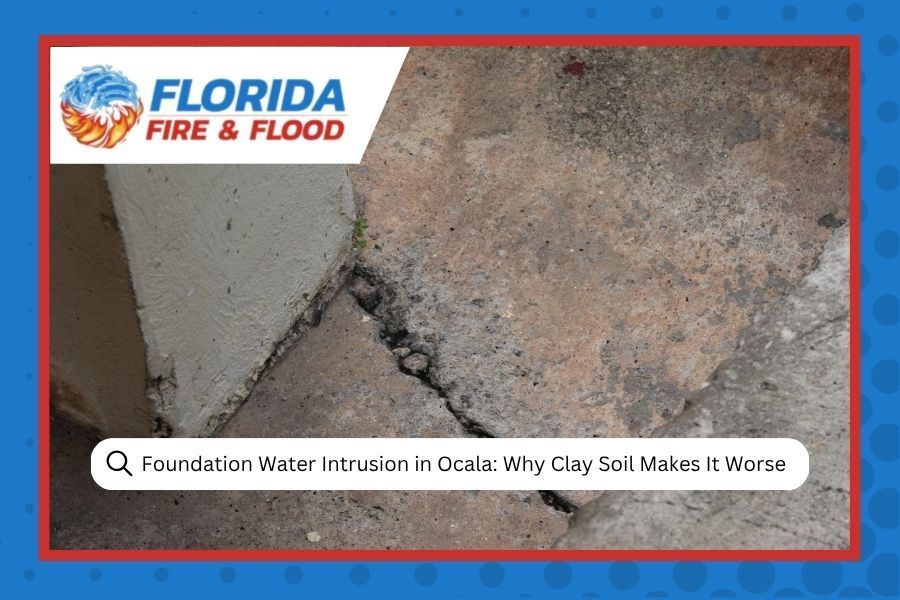
Foundation water intrusion in Ocala starts with clay soil. Learn the warning signs, how it differs from a plumbing leak, and when it is time to call us.
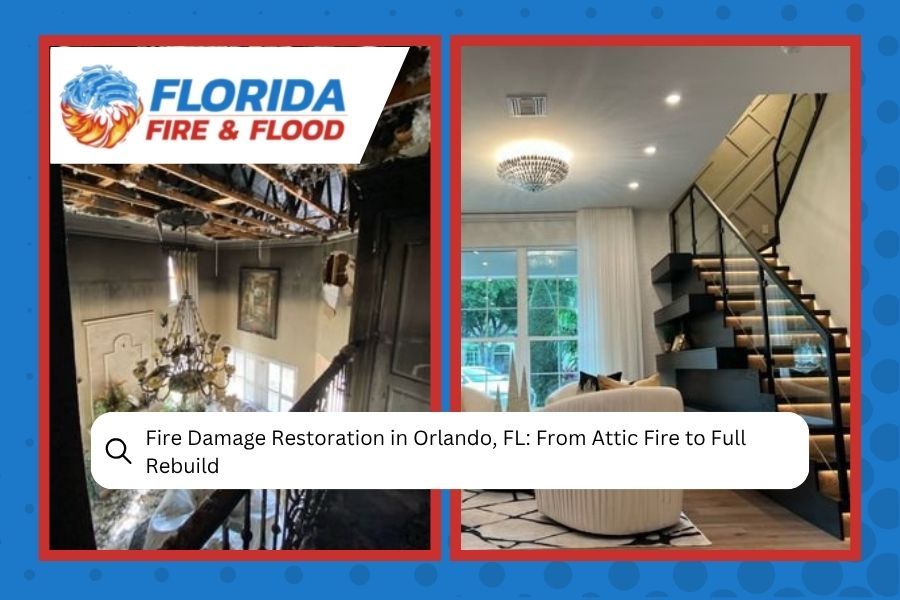
An attic fire took out the top floor of this Orlando home. See how our team rebuilt it, from the first tarp on the roof to finished kitchen and baths.
Soot damage cleanup after a house fire: learn what our IICRC certified team can save and what to replace, from textiles to electronics. Free consultation.