

AMRT - Applied Microbial Technician I, (Mold Remediation)
Foundation Water Intrusion in Ocala: Why Clay Soil Makes It Worse
September 2, 2026
Randy Lazarus
Jump To
Foundation water intrusion happens when groundwater pushes through small gaps in a slab or block wall instead of draining away from the house. Ocala sits on clay heavy ground that holds water against concrete for days. Our IICRC certified team at Florida Fire & Flood has traced this in homes all over Marion County. Below we cover the soil science, the signs, and how we handle foundation water intrusion Ocala homes see after a wet week.
What Foundation Water Intrusion Actually Is
It is groundwater moving through your foundation rather than around it. Water finds hairline cracks, cold joints, and the seam where the slab meets the block. It does not need a large opening. A gap the width of a business card is plenty.
Most homes around here sit on a slab poured right on grade, so there is no basement to catch anything on its way in. Water shows up at floor level instead. The first clue is usually a damp baseboard rather than a puddle.
Why Ocala Clay Soil Makes It Worse
Clay is the part people miss. Sand drains fast. Clay swells as it takes on water, then holds it like a wet sponge pressed flat against your foundation.
That swelling creates hydrostatic pressure, which is just the push of standing water against a surface. The deeper the soaked layer, the harder it pushes. Concrete is strong, and it is also porous, so pressure finds the weak spot.
Soil surveys for Marion County tell the story. Clay and clay loam sit under sandier topsoil across much of the Ocala area. Rain soaks in fast, then stalls at the clay, and the water has nowhere left to go but sideways.
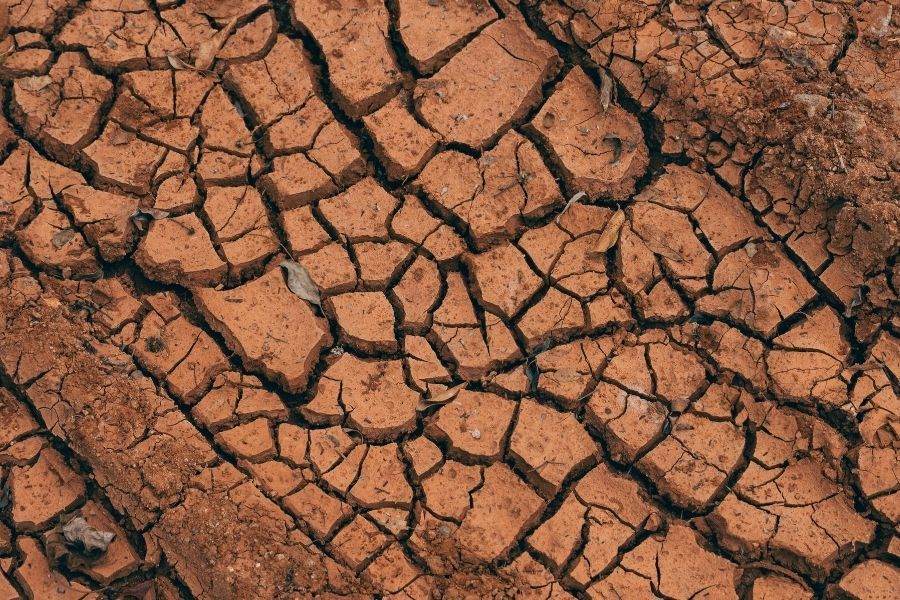
Clay pulls back from the foundation during dry spells, and when rain returns that gap fills first.
Damp baseboards after the last storm?
We are available 24/7 across Marion County, and a Free Consultation costs nothing but a phone call. Call us or reach us online.
Talk To Our TeamWarning Signs Inside Your Home
The clearest sign of seepage is a white chalky residue on the wall near the floor. That residue is efflorescence, the mineral salt left behind when water passes through concrete and dries. It tells you water moved through the wall. Not just sat on it.
Walk this list two days after a heavy rain, when the difference shows up best:
- White or gray powder low on the wall or baseboard
- Cracks that step diagonally from a corner, or run sideways up block
- A musty smell strongest when you crouch near the floor
- Tide lines or staining that stop a few inches up the drywall
- Flooring that cups, lifts at the seams, or feels spongy
- Paint bubbling near the base of a wall, ceiling still clean
Smell matters more than folks expect. The EPA guide to mold and moisture notes that a musty odor is often the first hint of mold, sometimes before anything is visible. In a slab home that odor settles low.
Our guide on spotting the signs of water damage covers the quieter ones.
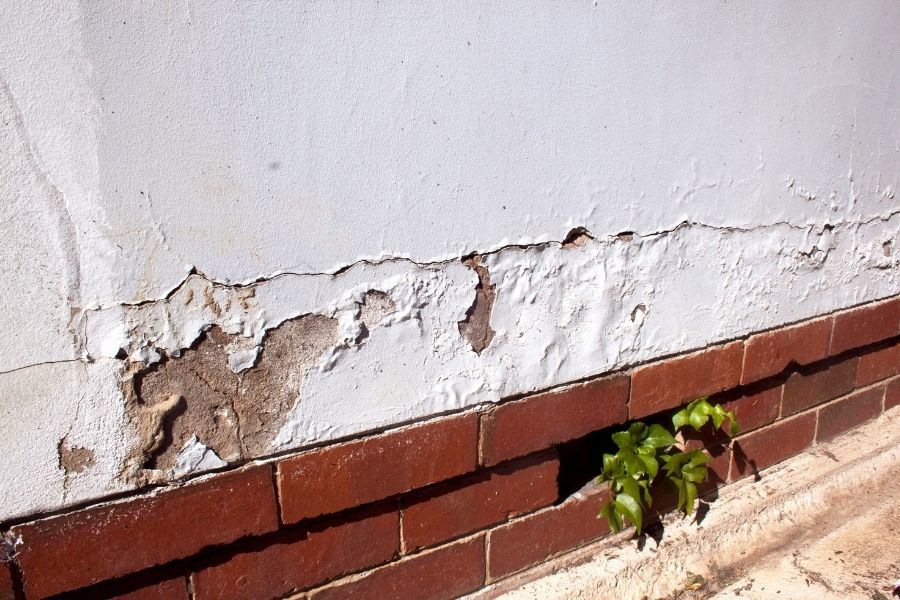
That chalky band of failing paint near ground level is one of the first signs moisture is wicking up through the wall.
Foundation Seepage or Plumbing Leak?
Timing separates the two faster than anything else, because seepage follows the weather and plumbing does not. A supply line under your slab has no idea it rained Tuesday. Clay soil cares a great deal. Track when the damp appears and you have most of your answer.
| Clue | Foundation Seepage | Plumbing Leak |
|---|---|---|
| Timing | Days after heavy rain | Any time, rain or not |
| Where it shows | Exterior walls, low corners | Near a fixture or bath |
| Water temperature | Cool, ground temperature | Sometimes warm |
| Water meter test | Dial sits still | Dial creeps with taps off |
| Mineral residue | Common on block | Rare |
Plumbing is still the more common culprit. If your damp spot shows no weather pattern, start with our look at faulty plumbing and water damage risk.
Why Storms Make It Worse
A hurricane can leave Ocala soil saturated for a week or more after the rain quits. Clay gives water up slowly. Pressure on your foundation stays high the whole time, so seepage often turns up three or four days after the storm has moved north.
The Ocala Clay Cycle
1. Storm dumps several inches in a few hours
2. Sandy topsoil drains, then clay stops it
3. Clay swells and presses against the foundation
4. Pressure pushes moisture through cracks and joints
5. Damp shows up inside days later
Storm season stacks the odds. Gutters overflow, grading washes out, and the ground is loaded before the next band arrives. Our storm damage restoration crews see this pattern every September in Ocala neighborhoods, and our hurricane season water damage guide covers the rest of the property.
How We Find and Fix It
We start with moisture readings, not demolition. Meters and thermal imaging show how far water traveled inside the wall cavity and under the flooring, and that map decides what dries in place and what comes out. We work to the IICRC S500 water damage standard and document the file in Xactimate for your carrier.
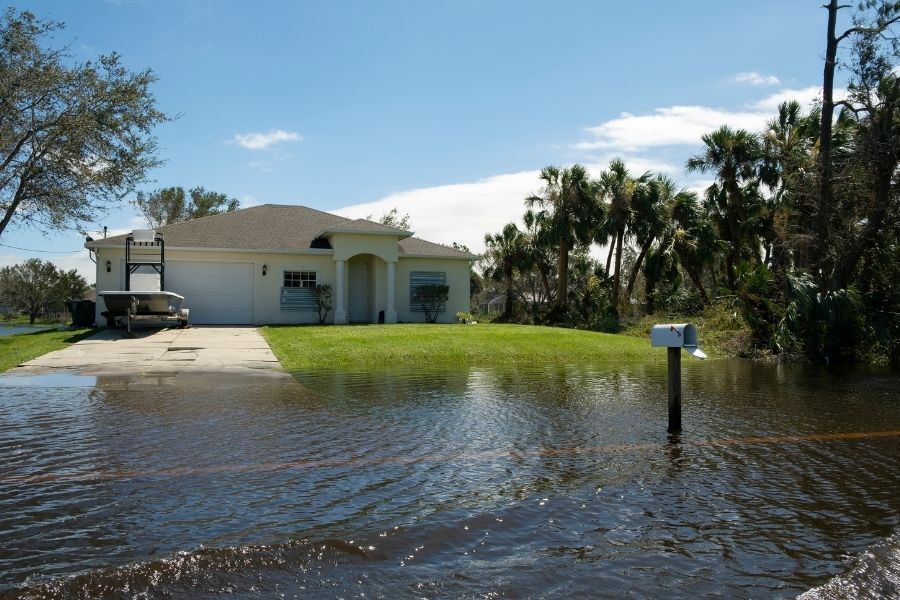
Water that sits in the yard for days after a storm keeps pressing on your foundation long after the sky clears.
Drying comes next. Air movers, dehumidifiers, and daily readings until materials hit target. If water sat long enough for growth to start, professional mold remediation handles that piece before rebuild.
We will also tell you plainly when the real fix is outdoors. Regrading, gutters, and drainage work belong to a foundation or grading contractor. Drying inside while ignoring the source only buys a few months.
Questions Ocala Homeowners Ask
Does homeowners insurance cover foundation water intrusion in Florida?
It depends on the cause. Groundwater seepage and long term moisture are commonly excluded, while a sudden pipe failure under the slab is usually covered. Document everything the day you spot it.
How soon after a hurricane does seepage appear?
Three to seven days is the range we see most often in clay soil. Some homes show nothing for two weeks, then a baseboard goes soft during the next rain.
Can I just seal the crack myself?
Interior sealant can hold back a little moisture for a while. Under real pressure, water finds another path. Fixing drainage outside does more good than any patch inside.
Is efflorescence the same thing as mold?
No. Efflorescence is mineral salt, white or gray, and it crumbles to powder when you rub it. Mold is organic, often fuzzy, and can be green, black, or brown. Both mean moisture is getting in.
Clay soil is not going anywhere, but water in your living room does not have to be a yearly event. Our family owned team is IICRC certified, insured, and on call 24/7 across Marion, Lake, and Sumter Counties. Call Florida Fire & Flood for a Free Consultation.

Randy Lazarus
About The Author:
Randy Lazarus is the owner of Florida Fire & Flood, a locally owned and family-operated restoration company serving Central Florida communities since 2021. Leading a team of IICRC-certified technicians, Randy has built a reputation for providing 24/7 emergency response and compassionate service to homeowners and businesses facing water damage, fire damage, and mold emergencies. As a member of the Central Florida community, Randy understands the unique challenges property owners face in the region and is dedicated to helping his neighbors restore their properties and get back to normal life.
Read More:
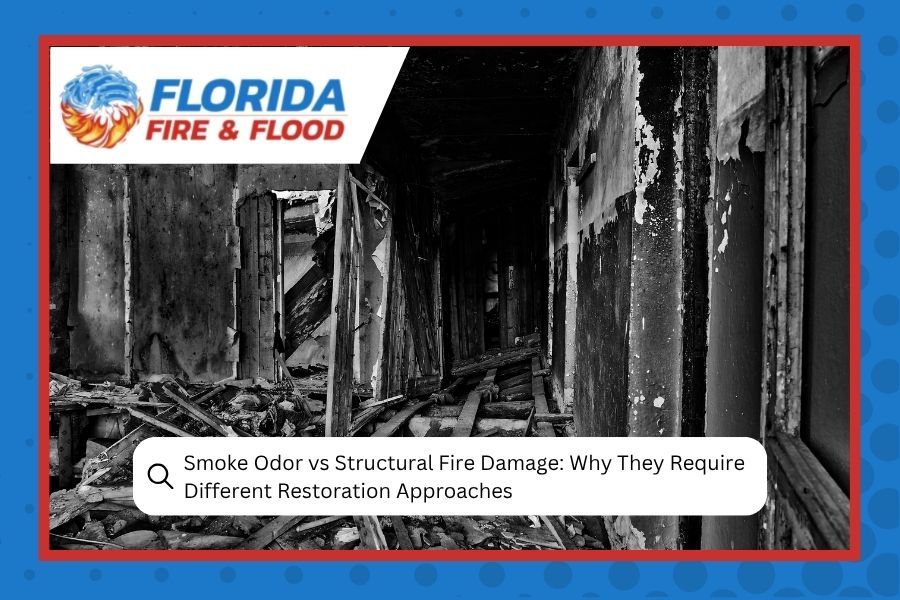
Smoke odor removal vs fire damage restoration explained: why odor and structural damage need different methods, timelines, and claims in Central Florida.
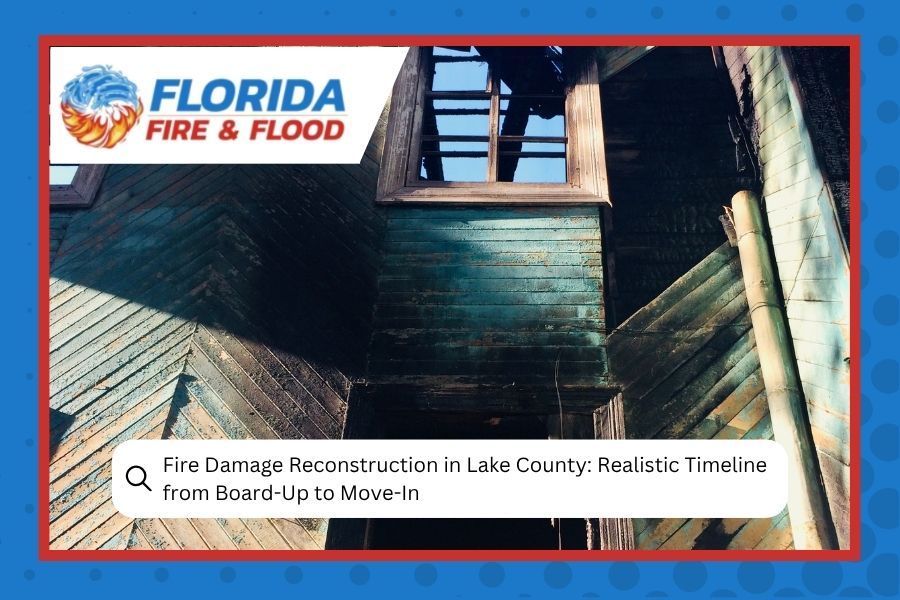
See the fire damage reconstruction timeline Lake County homeowners can expect, from board-up to move-in, plus the permit and insurance delays to plan for.

Firefighting water soaks floors, walls, and ceilings far past the burn zone. Learn why extraction and drying must run alongside fire and smoke cleanup.
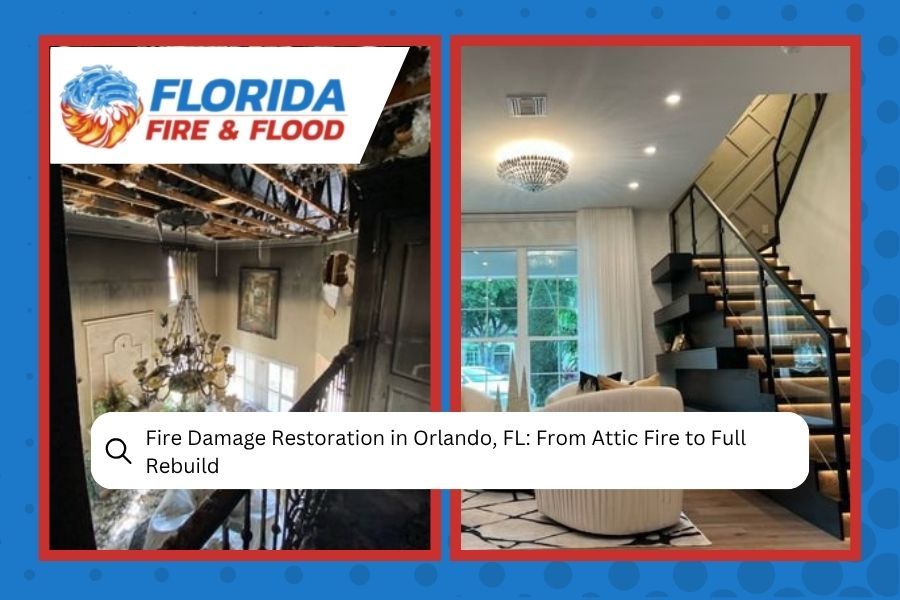
An attic fire took out the top floor of this Orlando home. See how our team rebuilt it, from the first tarp on the roof to finished kitchen and baths.
Soot damage cleanup after a house fire: learn what our IICRC certified team can save and what to replace, from textiles to electronics. Free consultation.
Hiring a water damage restoration company? Ask these 5 smart questions about certification, insurance, response time, gear, and repairs before you sign.