

AMRT - Applied Microbial Technician I, (Mold Remediation)

Crawl Space Moisture Control Before Summer: A Florida Homeowner's Pre-Summer Checklist
May 21, 2026
Randy Lazarus
Jump To:
If you've lived through even one Florida summer, you know the humidity doesn't mess around. Down in your crawl space, that same humidity becomes a steady feed of moisture that mold loves. Getting crawl space moisture control dialed in before May is one of the cheapest pieces of home maintenance you can do, and skipping it is how a small damp spot becomes a full remediation job by August.
Our team at Florida Fire & Flood has pulled soaked insulation, replaced torn vapor barriers, and cleaned up crawl space mold across Lake, Orange, Marion, and Sumter counties. The pattern is almost always the same: the homeowner never looked, moisture built up quietly, and by the time anyone noticed, the damage was done. Here's the pre-summer checklist we'd run on our own homes.
Why Florida Crawl Spaces Turn Into Mold Incubators in Summer
Central Florida summers sit at 70 to 90 percent relative humidity most days, and crawl spaces trap that moisture like a sponge. When warm humid air meets the cooler ground and plumbing under your home, it condenses on every surface it touches. Joists. Subfloor. Ducts. Insulation.
Give that condensation a week without airflow and you've got the exact conditions mold needs. According to the EPA's guidance on home moisture problems, controlling moisture is the single most important step in preventing indoor mold, because mold cannot grow without it. Once relative humidity in a crawl space crosses roughly 60 percent, spores start colonizing wood and any organic material they can find.
The good news? Most summer mold calls start as something a homeowner could've caught in 30 minutes.
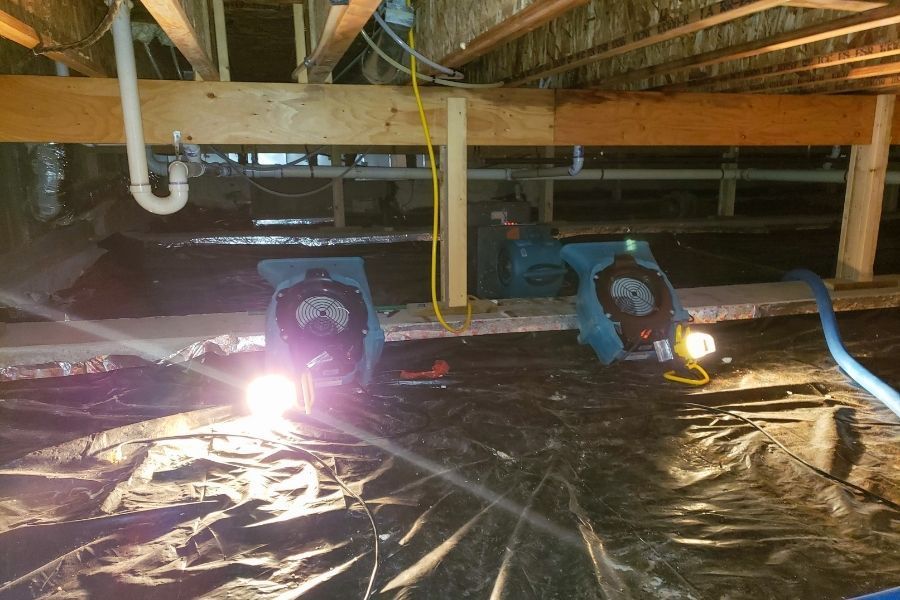
When a DIY check reveals standing water already in the crawl space, drying equipment like this is what we bring in next.
Your Pre-Summer Crawl Space Moisture Checklist
Work through these four steps in order. Bring a flashlight, gloves, an N95 mask, and clothes you don't mind throwing out. If anything you find makes you uneasy, stop and call a pro.
1. Inspect Your Vapor Barrier
Your vapor barrier is the plastic sheeting draped over the ground inside your crawl space. Its one job is keeping soil moisture from rising up into the wood framing above it.
- Tears, punctures, or seams that have pulled apart
- Sections that have shifted, leaving bare soil exposed
- Standing water pooled on top (a sign of a bigger leak, not a barrier failure)
- Dark staining underneath that points to past moisture issues
Small tears can be patched with vapor barrier tape. If more than about 20 percent of the barrier is damaged or missing, replace the whole thing before humidity season hits.
2. Check Crawl Space Ventilation
Older Florida homes usually have vented crawl spaces, and those vents need to stay clear. Walk your foundation and confirm every vent is open and free of debris, nests, or overgrown landscaping.
Newer builds often use sealed or conditioned crawl spaces instead, which rely on a dehumidifier. If that's your setup, test the dehumidifier now. A failed unit in July means a mold job in August.
3. Assess Drainage Around Your Foundation
Walk the outside of your house during or right after a heavy rain. Soil should slope away from your foundation, not toward it. Water pooling at the base of your walls ends up under the house.
Clean your gutters. Push downspouts at least five feet from the foundation. Re-grade any low spots where water sits for more than a few hours after a storm.
4. Remove Any Standing Water
If you find standing water down there, that's not a prevention problem anymore. That's active water damage. Find the source first. A dripping pipe, a slow foundation leak, or runoff from poor drainage all call for different fixes. Dry the area fully before sealing anything back up.
Found something you can't handle on your own?
We're here 24/7 when your checklist uncovers more than a torn vapor barrier.
Contact Our Team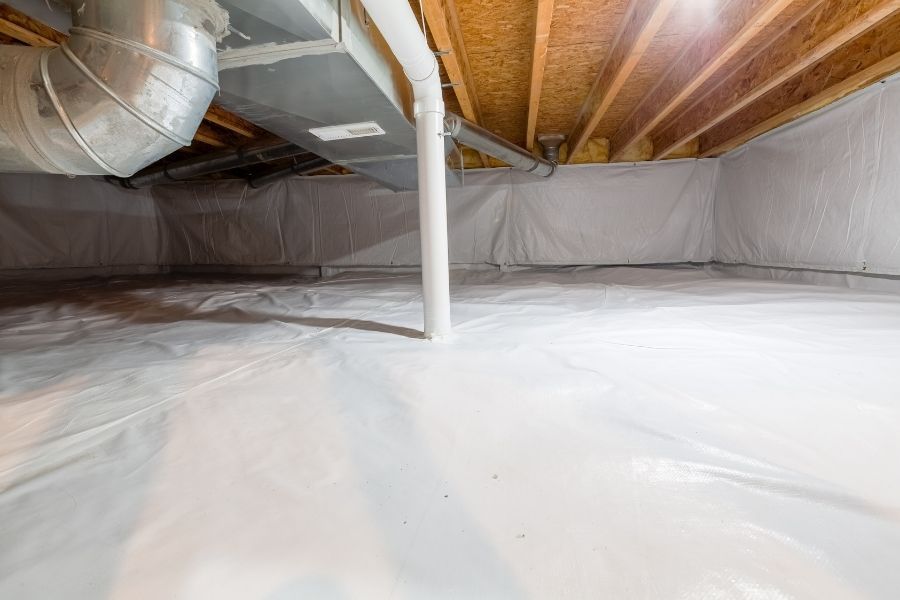
A properly sealed vapor barrier is the single biggest win for keeping summer humidity out of the crawl space.
Check Now or Pay Later: Prevention vs. Remediation
The math on crawl space prevention is pretty simple. Catching problems in April costs a fraction of what remediation costs after mold sets in. Here's the rough breakdown we see on jobs across Central Florida.
| What You're Fixing | Prevention Scope (Pre-Summer) | Remediation Scope (Post-Mold) |
|---|---|---|
| Torn vapor barrier | Patch or replace plastic sheeting | Full barrier replacement plus subfloor treatment |
| Blocked vent | Clear debris, trim landscaping | Mold removal from joists and insulation |
| Poor drainage | Re-grade, extend downspouts | Water extraction, structural drying, remediation |
| Standing water | Locate source, dry area | Contents removal, reconstruction, full remediation |
For more on how moisture quietly sets up mold colonies, see our guide on how to prevent mold and mildew in your Florida home.
When DIY Prevention Reveals a Bigger Problem
Sometimes you crawl under the house to check a vapor barrier and find something worse. Soft or stained wood. A musty smell that hits before you even get under. Visible mold growth across joists or insulation. A pool of water with no obvious source.
That's where the checklist ends and professional help starts. Mold remediation follows the IICRC S520 standard, which lays out containment, removal, and clearance steps DIY cleanup can't match. Our lead technicians are IICRC certified, and we're the team neighbors across Central Florida call when prevention turns into remediation.
If you want to keep reading, we've also covered common causes of mold and the early signs of toxic black mold.
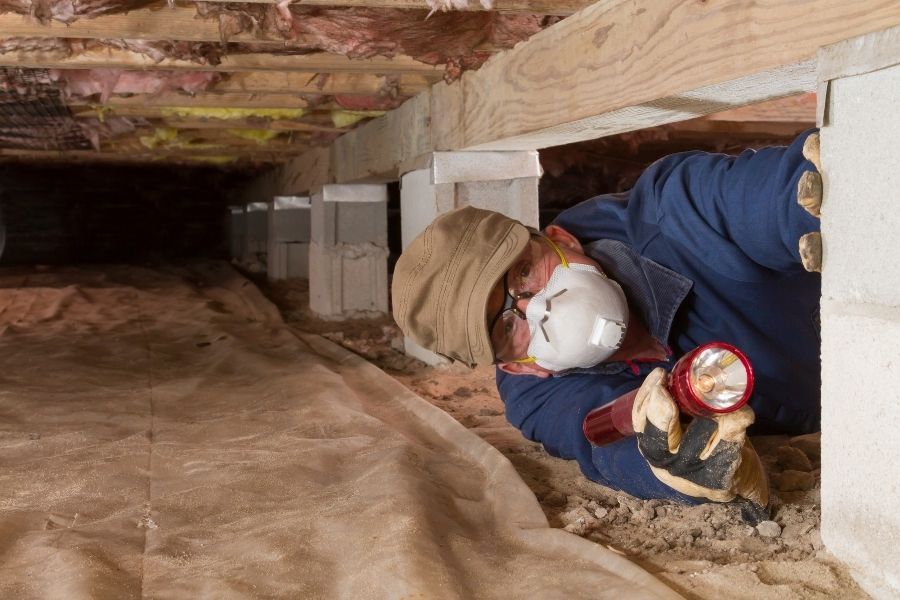
When a DIY check reveals something bigger, a certified tech with proper PPE takes the inspection from there.
FAQs
How often should I check my crawl space for moisture?
At minimum, run a full inspection every spring before summer humidity arrives, and a second check after hurricane season wraps up. After any plumbing repair, roof leak, or major storm, check within a week no matter the time of year.
Do I still need a vapor barrier if my crawl space is sealed?
Yes. Sealed and conditioned crawl spaces still need a ground vapor barrier to stop soil moisture from rising. They also include dehumidification and no foundation vents, but the plastic sheeting on the ground stays.
Can I clean crawl space mold myself?
Small, surface-level spots on non-porous materials can usually be cleaned with standard household cleaners. Anything larger than about 10 square feet, or anything on porous materials like wood or insulation, should be handled by a certified remediation team.
Does Florida Fire & Flood do mold testing?
No. Florida state law requires mold testing to be performed by a licensed hygienist, so we refer that work out to trusted partners. We handle the remediation and rebuild side once results come back.
Don't wait for the first 90-degree week to find out what's hiding under your house. If your pre-summer inspection turns up anything you're not sure about, give us a call for a free consultation. Our IICRC certified team is on call 24/7 across Central Florida.

Randy Lazarus
About The Author:
Randy Lazarus is the owner of Florida Fire & Flood, a locally owned and family-operated restoration company serving Central Florida communities since 2021. Leading a team of IICRC-certified technicians, Randy has built a reputation for providing 24/7 emergency response and compassionate service to homeowners and businesses facing water damage, fire damage, and mold emergencies. As a member of the Central Florida community, Randy understands the unique challenges property owners face in the region and is dedicated to helping his neighbors restore their properties and get back to normal life.
Read More:

Firefighting water soaks floors, walls, and ceilings far past the burn zone. Learn why extraction and drying must run alongside fire and smoke cleanup.
Foundation water intrusion in Ocala starts with clay soil. Learn the warning signs, how it differs from a plumbing leak, and when it is time to call us.
An attic fire took out the top floor of this Orlando home. See how our team rebuilt it, from the first tarp on the roof to finished kitchen and baths.
Soot damage cleanup after a house fire: learn what our IICRC certified team can save and what to replace, from textiles to electronics. Free consultation.
Hiring a water damage restoration company? Ask these 5 smart questions about certification, insurance, response time, gear, and repairs before you sign.
High water pressure damages pipes in Eustis homes. Learn the safe PSI range, regulator warning signs, and how to catch hidden leaks before they spread.