

AMRT - Applied Microbial Technician I, (Mold Remediation)

Pipe Joint Failures in Older Tavares Homes: Warning Signs Before the Flood
November 10, 2026
Randy Lazarus
Jump To:
Pipe joints in older homes rarely fail without warning, and the clues they leave depend on what your pipes are made of. Our IICRC certified team at Florida Fire & Flood cleans up after the pipe joint failure Tavares homes run into every year. Honestly? Most of those leaks were dropping hints for weeks.
Joints are where pipes get threaded, soldered, or glued together, then spend decades under pressure, heat, and humidity. If your plumbing quits, it usually quits there first.
Why Do Older Tavares Homes See More Pipe Joint Failure?
Older Tavares homes often still run on original plumbing, and every pipe material has a shelf life. Joints go first. That's where pipe walls get cut, heated, or glued during installation, and decades of water pressure, hot attics, and humid air slowly turn those weak spots into leaks.
Tavares has a little of everything: older homes near downtown, block homes from the '50s and '60s, and neighborhoods from the '80s and '90s. Each era used different pipe.
Most homes here sit on slabs, so supply lines run under floors, through walls, or across the attic. A failing joint can drip there for months. High pressure adds strain too, as our post on how excess water pressure destroys pipes explains.
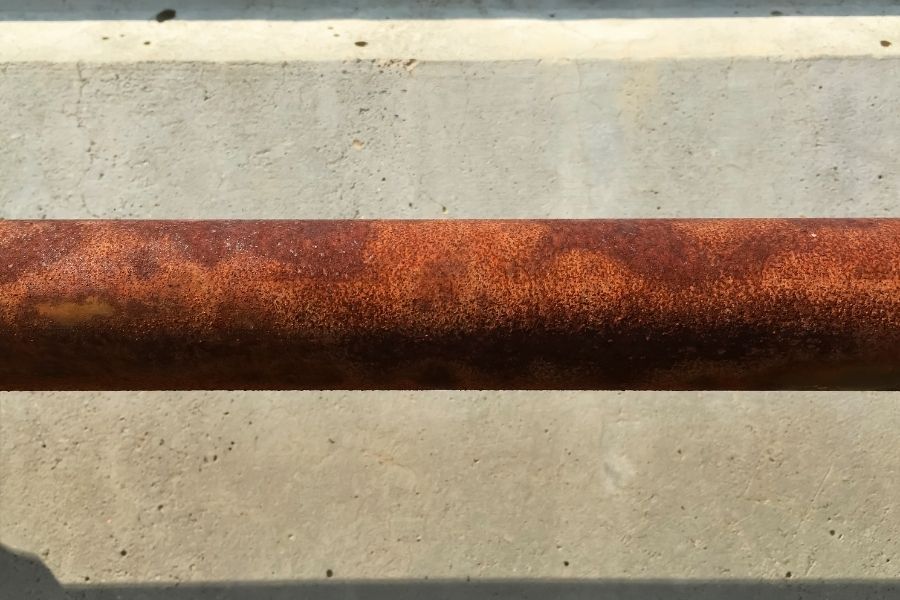
Rust at threaded fittings is often the first visible sign of galvanized pipe wearing thin.
Already seeing a stain or a soft cabinet floor?
We offer leak detection and full water damage restoration services, 24/7. Call us for a Free Consultation.
What Are the Warning Signs of Pipe Joint Failure by Pipe Type?
Galvanized steel rusts at the threads, copper develops pinhole leaks and green crust, and CPVC turns brittle and cracks at its fittings. Knowing which one you have tells you exactly what to watch for. Check the pipes at your water heater or under the kitchen sink to find out.
Galvanized Steel: Corrosion at the Threads
Galvanized pipe is zinc coated steel, common in homes built before about 1970. Cutting threads strips that coating, so the threads rust first. Watch for brown water when you first turn on a tap, weak pressure at one fixture, and crusty buildup or dampness where pipes screw into fittings.
Copper: Pinhole Leaks and Green Joints
Copper became common by the 1960s and holds up well, but slightly acidic water (below a pH of about 6.5) pits it from the inside until pinholes form. On city water? Your utility's yearly water quality report lists the pH.
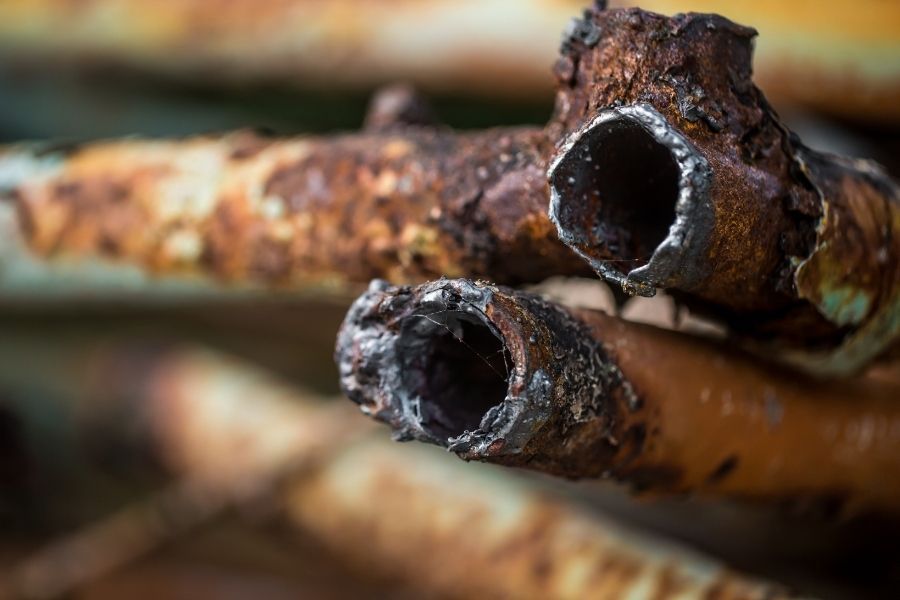
Crusty green buildup with moisture around it means a copper joint is seeping, not just aging.
Green or blue crust right at a soldered joint usually means water is escaping, and pinholes love to hide. On one pinhole pipe leak job in Orlando, a pantry wall looked fine up top while the drywall and subfloor below were soaked.
That hidden moisture feeds mold. The EPA's guide to mold and moisture says wet materials should be dried within 24 to 48 hours. If growth has already started, our mold remediation services team can handle it safely.
CPVC: Brittle Joints and Hairline Cracks
CPVC is the cream or tan plastic pipe found in plenty of Florida homes built from the 1980s on. Age, attic heat, and certain sprays and caulks make it brittle, and failures usually start at glued fittings.
Look for hairline cracks at fittings, chalky residue, and drips after hot water runs. And please don't bump old CPVC during a repair, since it can snap like a dry cracker.
Quick Decoder: What Is That Sign Telling You?
Tap a sign to see what it means.
Rusty water first thing in the morning
Usually galvanized pipe corroding inside. If it keeps coming back, call a plumber.
Green or white crust on a joint
Wipe it dry and check again tomorrow. Wet again means an active leak.
Water meter moving with everything off
A hidden leak, often in a wall or under the slab. Time for professional leak detection.
How Often Should You Inspect Older Plumbing?
Do a quick visual check every month, test your water meter every three months, and have a licensed plumber inspect homes 25 years or older every year or two. That rhythm catches slow leaks early, and it takes less time than a grocery run.
| How Often | What to Check | Why It Matters |
|---|---|---|
| Monthly | Under sinks, water heater, washer and toilet lines | Catches drips and stains early |
| Every 3 months | Water meter test | Finds leaks in walls or under the slab |
| Twice a year | Exposed joints in the garage, attic, and water heater closet | Spots rust, crust, and cracks |
| Every 1 to 2 years | Plumber inspection for homes 25 years or older | Checks what you can't see |
How to Run the Water Meter Test
- Turn off every faucet and water appliance.
- Note the meter reading or the small leak indicator.
- Wait about an hour without using any water.
- If the numbers moved or the dial spun at all, water is escaping somewhere.
For other common culprits, see our guide to faulty plumbing and water damage risk.
When Does Proactive Pipe Replacement Make Sense?
Replacing aging pipes on your own schedule beats replacing them after a flood. If you've had two leaks in a year, still have original galvanized lines, or have CPVC that cracks when touched, ask a licensed plumber about a repipe. A planned job means no soaked floors and no midnight emergency.
Insurance matters too. Many Florida insurers check plumbing age during a four point inspection, and slow leaks from worn out pipes are commonly denied as wear and tear.
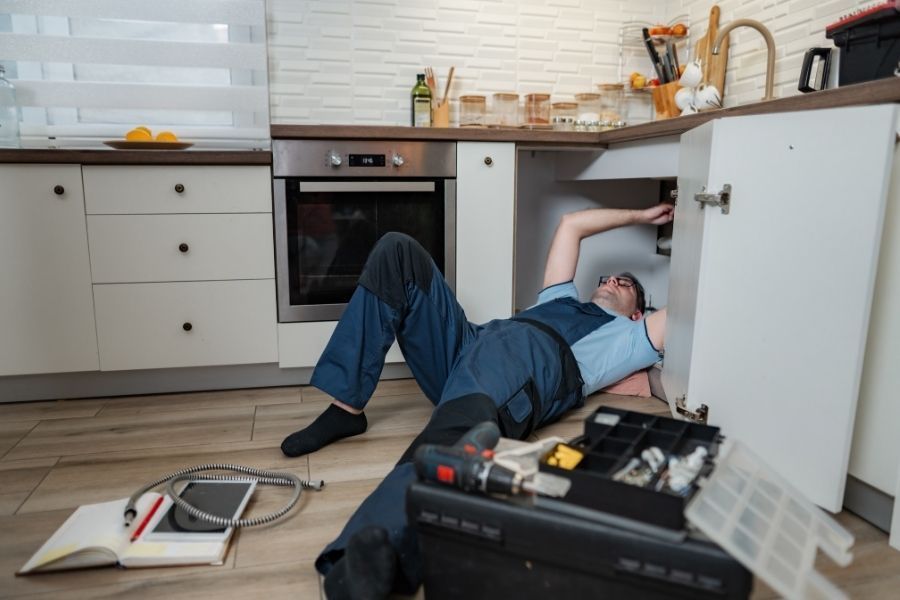
A routine look under sinks and behind appliances catches loose or weeping joints while they’re still a drip, not a flood.
If a joint lets go first, we've got you. Our crew follows IICRC restoration standards for drying, documents everything with moisture readings and Xactimate estimates, and works directly with your insurance company so you don't have to play middle man.
Worried about the pipes in your Tavares home?
Florida Fire & Flood is local, family owned, and usually less than an hour from any Tavares address, so call us day or night for a Free Consultation.
Not in Tavares? We also cover Eustis, Mount Dora, Leesburg, and the rest of our Central Florida service areas.
Pipe Joint Failure FAQs
Does homeowners insurance cover a failed pipe joint in Florida?
It depends on how it failed. Sudden breaks are often covered, while slow leaks from worn out pipes are commonly denied. We document the damage and work with your insurer directly.
Can I tighten a leaking pipe joint myself?
We wouldn't. A wrench on an old galvanized or CPVC joint can snap it and turn a drip into a flood. Shut off the water and call a licensed plumber.
How can I tell what kind of pipes my Tavares home has?
Check the exposed pipe near your water heater. Dull gray metal with threaded ends is galvanized, reddish brown metal is copper, and cream or tan plastic is CPVC.

Randy Lazarus
About The Author:
Randy Lazarus is the owner of Florida Fire & Flood, a locally owned and family-operated restoration company serving Central Florida communities since 2021. Leading a team of IICRC-certified technicians, Randy has built a reputation for providing 24/7 emergency response and compassionate service to homeowners and businesses facing water damage, fire damage, and mold emergencies. As a member of the Central Florida community, Randy understands the unique challenges property owners face in the region and is dedicated to helping his neighbors restore their properties and get back to normal life.
Read More:

Mobile home fire safety in Orange County: 6 manufactured home fire risks, from aging aluminum wiring to crushed dryer vents, plus a simple fix for each.
Smoke odor removal vs fire damage restoration explained: why odor and structural damage need different methods, timelines, and claims in Central Florida.
See the fire damage reconstruction timeline Lake County homeowners can expect, from board-up to move-in, plus the permit and insurance delays to plan for.

Firefighting water soaks floors, walls, and ceilings far past the burn zone. Learn why extraction and drying must run alongside fire and smoke cleanup.
Foundation water intrusion in Ocala starts with clay soil. Learn the warning signs, how it differs from a plumbing leak, and when it is time to call us.

An attic fire took out the top floor of this Orlando home. See how our team rebuilt it, from the first tarp on the roof to finished kitchen and baths.