

AMRT - Applied Microbial Technician I, (Mold Remediation)
How to Clean up Water-Damaged Drywall
August 13, 2023
Randy Lazarus
Water damage repairs are often complex and multi-layered because the water can seep into so many nooks and crannies of a house. Not only can it seem deep into the floors, but it can also be absorbed by drywall in the ceilings or walls. Water-damaged drywall can be easy enough to clean up if the walls are just damp with clean water. In such cases, undertaking water damage cleanup in Central Florida becomes manageable to effectively dry out the material with minimal complications.
However, there are many cases where the drywall has suffered too much damage and needs to be repaired or replaced. When this happens, it’s important that homeowners carefully remove any of the affected materials and replace them as quickly as possible. The following steps can help a person restore their property to its pre-loss condition right away.
Prepare the Area
Before any work can truly begin on the drywall, it’s important that the homeowner takes the time to prep their workspace. This step may involve water extraction and drying if there is still a lot of water left in the home. If not, homeowners may be able to skip the extraction and focus on removing any water-soaked materials, including furniture, carpet, padding, or other building materials.
Wear Proper Safety Equipment
Next, it is strongly recommended that people wear the proper protective equipment if they plan to cut or demolish any of the drywall in their homes. This is especially important if the work is being done in an old home as there is a risk of exposure to asbestos in old drywall joint compound. Respiratory protection and eye protection should be worn to protect from the dust as well.
If the homeowner is dealing with grey or blackwater, it’s also a good idea to wear gloves or coveralls. This can protect against exposure to harmful contaminants, such as chemicals, biohazards, bacteria, and more.
Remove Damaged Drywall Section
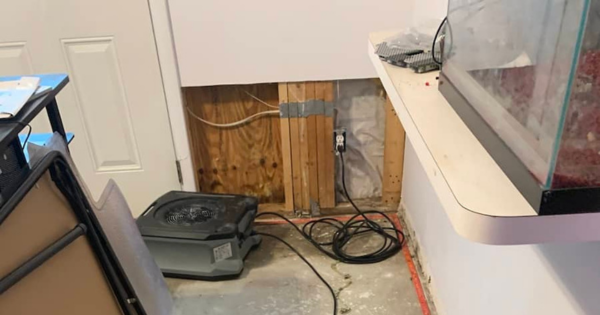
Once all of the steps have been taken to prepare for the job, homeowners can finally start to remove the water-damaged drywall. This should be done by first determining how much drywall will need to be removed.
To do this, homeowners need to know the water level. Stains can help indicate the maximum height of the flood, but if there are no signs, it’s best that the homeowner inspect the drywall. Moisture meters can be helpful in this process. For a seamless restoration, consider enlisting the services of a reputable water-damaged drywall removal company that can efficiently handle the job. For a seamless restoration, consider enlisting the services of a reputable water-damaged drywall removal company that can efficiently handle the job while keeping an eye on factors influencing water damage cleanup costs.
As a general rule of thumb, homeowners should remove about two feet higher than the water level reached. However, if the water level is greater than two and a half feet, it is typically easier to repair the drywall by replacing the entire piece.
Homeowners should also consider removing the entire piece of drywall if it looks like it is cracked, crumbling, or sagging. These signs indicate that the drywall has weakened, and it won’t be able to be restored simply by drying it. This also applies to
water damage stucco repair, where the stucco may need complete removal if it shows severe signs of damage.
Repair or Replace Drywall
The process of replacing water-damaged drywall can sometimes be too complicated for the average homeowner, especially if there are many sheets that will need to be hung. In these cases, it’s best to hire a professional contractor to complete the rest of the drywall repair process. Not only can they hang it, but they can also blend it with the existing walls and paint it.
If a homeowner insists on DIYing the job, they will need to measure the size of the hole so that they can cut a new piece of drywall. From there, they can secure the piece with screws and drywall clips. A combination of drywall tape and joint compound will help the piece blend into the existing wall. From there, they can sand and smooth the surface before painting it to match the rest of the wall.
Read About - Repairing Water-Damaged Furniture
Check Results
Before the job can be considered complete, homeowners should check the results. They will need to inspect for any signs of remaining moisture because this could cause secondary water damage down the road. In addition, homeowners should check to make sure they don’t miss any signs of mold growth.
Unfortunately, it can be difficult for most homeowners to check for hidden water damage because they lack the knowledge and tools to inspect the property. Therefore, it’s best to hire a professional
water damage restoration contractor in Central Florida to complete the entire job from the first inspection to the last.
Find out More About How to Repair Drywall After Water Damage
Homeowners in need of drywall repairs after water damage should
contact Florida Fire & Flood to learn more about how their professionals can handle the job. They are available 24/7 for emergency water damage repairs, so there is no reason to put off calling today! Customers can also reach the contractors by submitting the online quote form.

Randy Lazarus
About The Author:
Randy Lazarus is the owner of Florida Fire & Flood, a locally owned and family-operated restoration company serving Central Florida communities since 2021. Leading a team of IICRC-certified technicians, Randy has built a reputation for providing 24/7 emergency response and compassionate service to homeowners and businesses facing water damage, fire damage, and mold emergencies. As a member of the Central Florida community, Randy understands the unique challenges property owners face in the region and is dedicated to helping his neighbors restore their properties and get back to normal life.
Read More:
Smoke odor removal vs fire damage restoration explained: why odor and structural damage need different methods, timelines, and claims in Central Florida.
See the fire damage reconstruction timeline Lake County homeowners can expect, from board-up to move-in, plus the permit and insurance delays to plan for.

Firefighting water soaks floors, walls, and ceilings far past the burn zone. Learn why extraction and drying must run alongside fire and smoke cleanup.
Foundation water intrusion in Ocala starts with clay soil. Learn the warning signs, how it differs from a plumbing leak, and when it is time to call us.

An attic fire took out the top floor of this Orlando home. See how our team rebuilt it, from the first tarp on the roof to finished kitchen and baths.
Soot damage cleanup after a house fire: learn what our IICRC certified team can save and what to replace, from textiles to electronics. Free consultation.